
Our lecturer Tim Porter writes "We know all the images - the Stable, the Manger, the Shepherds, the Kings - but the endless reinterpretations of the Christmas Story have a fascination all their own. Customs alter, doctrines evolve, and we can see this in our thousands of medieval churches, charting the subtle changes in the way that people imagined the Nativity. This talk aims to put in all in context, and show you a wide, sometimes surprising selection of English Art, and to offer a quiet, thoughtful celebration of Christmas".
Tim describes himself as an itinerant lecturer, with two subject areas; music and the middle ages. Training originally in music, Tim worked as a composer in touring theatre during the 1970s and 80s; but his studies, researches and explorations of medieval Britain always developed alongside. Currently, he is a guest lecturer at museums including the Ashmolean in Oxford, and works as a tour guide for specialist history groups.
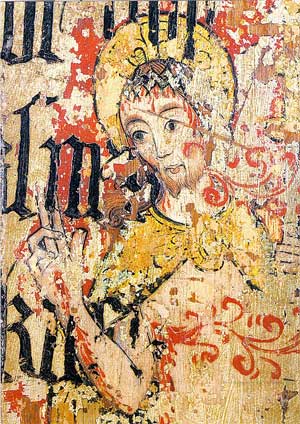
The fame of the Queen of Sheba has lasted across the many intervening centuries since she made her epic journey from her distant land to the court of King Solomon. A passage in the Bible's Book of Kings has immortalised this Queen and the journey that she made, her camel caravan laden with gold and incense as gifts for the King of Jerusalem. In this talk Louise looks at how the Queen of Sheba has captured the imagination of great artists, inspired epic films and has led archaeologists to go in search of her land - a search that has led to discoveries of great temples, tombs and treasures in both the Yemen and Ethiopia.
Louise Schofield has been working in Ethiopia since 2006, directing archaeological conservation and development projects in that extraordinary country. Her current archaeological site - in Tigray province, northeastern Ethiopia - is a temple, probably dedicated to a moon god and dating to the 5th century BC - a time when this area of Ethiopia formed part of the kingdom of Sheba. Excavations undertaken there in 2015 and 2016 have uncovered a rich cemetery which includes an extraordinary burial of a 2000 year old Ethiopian 'Sleeping Beauty'.

At the turn of the last century, Vienna was the capital of a vast empire and one of the most exciting artistic laboratories in the world. It produced painters such as Gustav Klimt, Egon Schiele and Oskar Kokoschka, architects like Otto Wagner, Adolf Loos and Josef Hoffmann, the psychoanalyst Sigmund Freud, the composer Gustav Mahler and the philosopher Ludwig Wittgenstein.
Looking at these and others figures in the context of the society in which they worked, this talk asks how and why the City of Dreams became a cultural hotbed around 1900.
A writer and broadcaster, Gavin Plumley has appeared on BBC Radio 3 and Radio 4 and has contributed to The Independent on Sunday and The Guardian. He lectures widely about the culture of Central Europe during the 19th and 20th centuries.

This lecture is a whistle-stop tour of eight of the greatest fresco cycles in Italian art. We begin with the ground-breaking St. Francis cycle, in the Upper Church of San Francesco in Assisi. We then travel to Padua and the high drama of Giotto's Arena Chapel, before returning to Assisi for Simone Martini's courtly St. Martin chapel and Pietro Lorenzetti's intensely emotional Passion cycle.
In Siena, we unravel the mysteries of Ambrogio Lorenzetti's Allegories of Good and Bad Government in the Palazzo Pubblico. We then move on to Florence, and into the 15th century, to see the bold innovations of Masaccio and Masolino in the St. Peter cycle for the Brancacci Chapel and to contemplate Fra Angelico's more intimate images created for his fellow Dominican friars at San Marco.
We finish the tour in Arezzo, with Piero della Francesca's entrancing Legend of the True Cross, a millenia-spanning biblical and medieval saga recounted with drama, elegance, and a bit of burlesque comedy.
This lecture is a chance to gain new insight into these works, find out why they are important and - above all - enjoy some of the greatest stories ever told in paint!
Dr Janet Robson has published numerous scholarly articles on thirteenth and fourteenth-century Italian art. Her book The Making of Assisi: the Pope, the Franciscans and the Painting of the Basilica, on the frescoes in San Francesco in Assisi (co-written with Donal Cooper) was awarded the Art Book Prize for 2014. Janet has held research fellowships at the Harvard University Center for Italian Renaissance Studies in Florence and the British School at Rome. She now divides her time between her homes in London and Assisi.

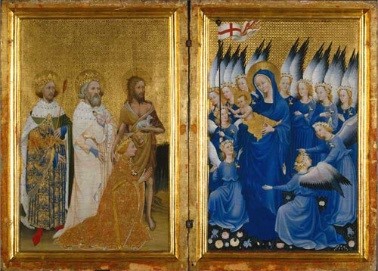
The Wilton Diptych is one of the most beautiful yet enigmatic paintings ever made and the hammer-beam angel roof of Westminster Hall has been described by the architectural historian John Harvey, as 'the most outstanding individual work in the whole history of English art'.
Both appear in the last decade of Richard II's turbulent reign and they represent the high watermark of a period rich in artistic achievement.
This lecture will focus on these two works of art but will also include other examples of art and architecture from late medieval England.
Born on the Isles of Scilly and educated at Truro School, Cornwall, and Birmingham University, Mark Cottle's career has been spent in education and training at home and abroad. He has lectured at Exeter College on Medieval and Tudor history, St Mark's & St John's University College, Plymouth, and at Bath University on Anglo Saxon and medieval England. Mark currently runs two small companies providing training and study breaks.
Tintoretto (Jacopo Robusti, 1518-94) was undoubtedly the most prolific Venetian painter of his time. But carving out a career as an artist in mid-sixteenth century Venice was no easy task. By the time of his birth, Titian had become the supreme master of painting in the city, although his work commanded high prices beyond the reach of many Venetian patrons.
This talk considers the life and work of Jacopo Tintoretto in order to explore how the artist carved out a successful career for himself in the city by developing a highly innovative style of painting that was on the one hand a response to Venetian tradition, but which was also highly idiosyncratic and unique. His style heralded the development of a new approach to art - one that was to fundamentally change the course of painting in Venice forever.
Caroline Brooke is an art historian specialising in Renaissance Art. She lectures at the National Gallery, the V & A and teaches courses at the Courtauld Institute.

Bustling, noisy, vibrant, New York epitomises the modern city at its best (and occasional worst).
Sailing past the Statue of Liberty, we are processed on Ellis Island before marvelling at this skyscrapered leviathan of a metropolis.
Marvel at the Empire State building, the Chrysler, the Flat Iron and the Rockefeller Centre. Wonder at the splendours of the Brooklyn Bridge, the massive Metropolitan Museum of Art, the delicious Frick Collection, Central Park and Frank Lloyd Wright's Guggenheim.
And as for the lavishly refurbished Grand Central....wow!
Andrew Davies is the author of 9 books, including The East End Nobody Knows; he is a frequent contributor to radio and television; and has lectured all over the world. Andrew also organises walks to complement his lectures.

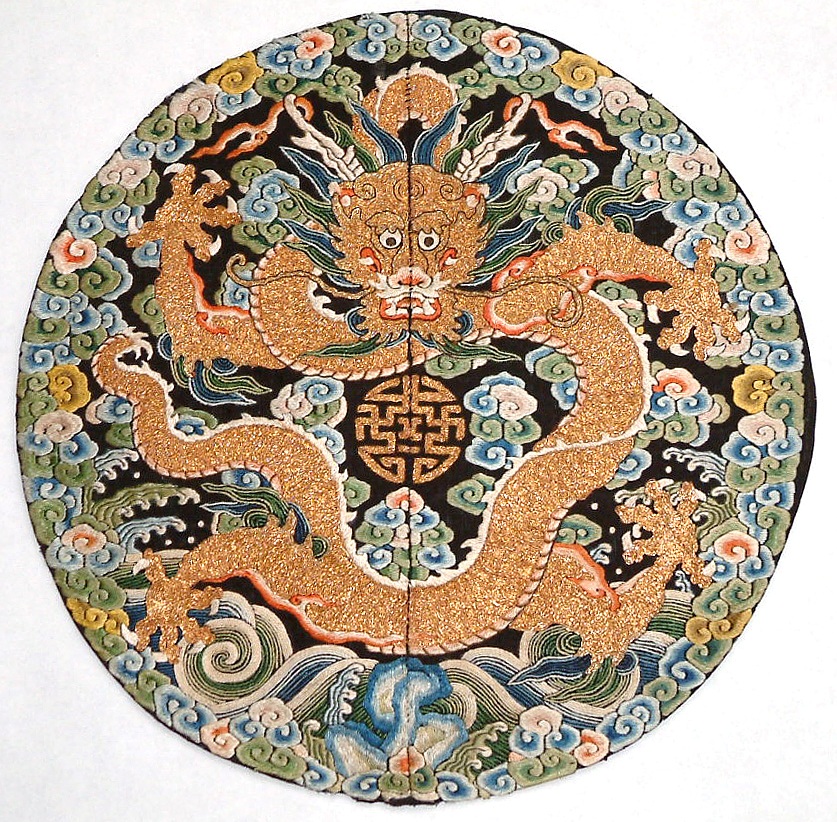
This lecture provides an insight into how highly decorative and expertly created costume and textiles were used at the Chinese Imperial Court to denote the rank and status of the wearer. Insignia and symbols, defined within extensive regulations, identified where the person resided in the Ranks within the Imperial family or the Civil (Mandarin) and Military Officials. We will also look at dress accessories that were used to determine rank.
The focus will be on the Qing Dynasty but there will be contrasts with examples of Imperial costume from the earlier Ming Dynasty.
David Rosier lived and worked in Asia for over 25 years. He assembled a collection of approximately 700, predominately Qing Dynasty (1644-1911), Imperial and related textiles/costume accessories. He is a Past Committee Member of the Hong Kong Textile Society and a frequent speaker on Imperial Insignia and Badges of Rank.
Ravenna with its cluster of 5th and 6th century churches and baptisteries contains some of the finest examples of early Christian art, a kaleidoscopic array of glittering wall mosaics. This was an art form in which the Byzantines excelled, producing examples of truly outstanding beauty in Ravenna.
Dante describes the mosaics as "a great symphony of colour, their chief characteristics being clarity, harmony, brilliant colours and a decorative rhythmic design".
This lecture looks at the mosaics in the mausoleum of Galla Placidia, in the church of San Vitale, in the churches of S. Apollinare Nuovo and S. Apollinare in Classe, and in the two baptisteries of Ravenna. These were all created between c.450-550 during a time when Ravenna was a major port linking the Italian peninsular to the Eastern Mediterranean and a cultural centre of considerable importance.
Jane is a freelance lecturer for The Arts Society and other arts organisations. She runs her own art tours company, specialising in cultural visits. She speaks several foreign languages and has translated a number of works of 19th century Russian literature for Penguin Books and Oxford University Press. She has a BA in Russian Studies and an MA in Byzantine Studies.

The question of fake decorative art has been in vogue for hundreds of years. However increasingly sophisticated methods are being used by criminals today, which generate vast profits.
This lecture reveals actual case studies, demonstrating the lengths forgers will go to in passing off works as legitimate. Skilled forgers capable of imitating well known artists have provided the ability to dupe many at the highest level within the art market.
Experts have estimated that a high percentage of all works within the art market are fake. These scams ultimately inflict considerable damage to collectors and the trade.
Malcolm Kenwood is a former specialist police detective investigating art and antique crime. He directed lectures to educate law enforcement officers to compat crime, in partnership with the Metropolital Police Art and Antiques Unit. He was also the Recoveries Director for the Art Loss Register which operates an international commercial database of stolen cultural property.

During the 1880s the city of Glasgow emerged as a major cultural centre rivalling the nation's capital, Edinburgh. New money and a determination to collect modern art provided great opportunities for a generation of up and coming artists.
Now known as the Glasgow Boys this group included James Guthrie, Atkinson Hornel, George Henry, and the Irish Glasgow Boy, John Lavery.
Influenced by Japan, and contemporary French and Dutch painting these, artists brought a breath of fresh air to Glasgow. They adopted en plein air painting and escaped to the countryside to find scenes of everyday life. The Colourists- Peploe, Ferguson, Hunter and Cadell- also looked to France, especially Matisse and the bright colours of the Fauves, taking Scottish painting into the modern era.
Anne Anderson worked as an archaeologist and was elected to the Society of Antiquaries in 1997. She has lectured widely on topics such as the Aesthetic Movement, Arts & Crafts, Art Nouveau and Modernism and currently holds fellowships at Exeter University; the Huntington Library, CA; the Henry Francis Du Pont Winterthur Museum and Library; the Cumming Ceramic Research Foundation and is a consultant for Lord Frederic Leighton's Studio-House, in Kensington.
Dr Anderson's 2008 exhibition Ancient Landscapes, Pastoral Visions Samuel Palmer to the Ruralists attracted some 47,000 visitors. She has published books on Roman pottery, Art Deco teapots and Edward Burne-Jones. Her television credits include BBC's Flog It! Anne is also a tutor at the V&A on the Chardin to Cézanne year course.
