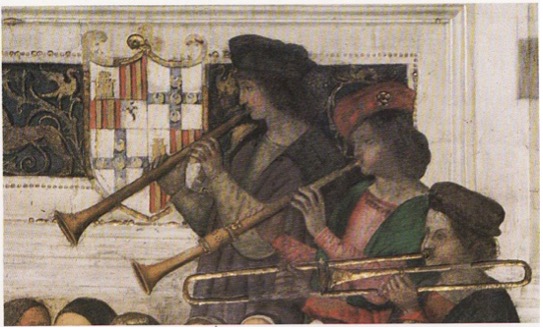
Using illustrations from illuminated manuscripts, readings from literature and contemporary accounts, and the haunting songs, carols and lively dance tunes of medieval England, Sarah brings alive the spirit of a Medieval Christmas- a time of joy and celebration for some, but hardship and suffering for others. With extracts from literature and manorial household accounts, she pieces together life in a medieval manor house at Yuletide. In addition to her reproduction medieval harps, she adds plucked psaltery, hurdy-gurdy, hammered dulcimer and gemshorn to the musical mix, performing carols, music and readings for an atmospheric and musical seasonal celebration.
About our speaker:
Sarah is a graduate and prize-winner from the Royal Academy of Music and in 2015 was elected an Associate. She performs, writes and lectures about the harp regularly in America, Australia, Europe and UK.

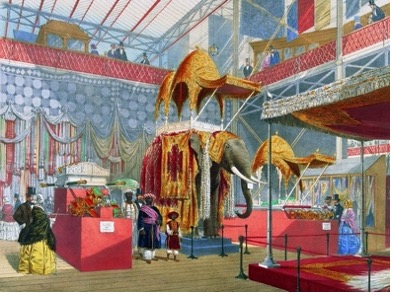
From the very first Great Exhibition in London held in the magnificent Crystal Palace, to the awe-inspiring events in Paris, New York and across the world there have been many exhibitions that we would consider Great Exhibitions or World’s Fairs. We won't consider all of these events in this talk, but we will consider the most important exhibitions such as London 1851, Paris 1900 and 1925, Brussels 1958 and New York 1964.
Tracing the development of Great Exhibitions from their birth in London in 1851 at the heart of a thriving Empire, to Europe, in particular Paris where many wonderful events were held, across the Atlantic to America and New York in the post-war period and further East to China, Japan and beyond in recent times.
About our speaker:
I am currently a senior valuer and head of department at Lawrences in Crewkerne, one of the country's leading provincial auctioneers. I have also worked in Higher Education as Course Leader and a Senior Lecturer on the no longer extant Fine Arts Valuation Degree at Southampton Solent University. I taught on a range of subjects including furniture, silver art and design history. I completed a PhD in the Arts and Crafts Movement and have written on design history for a number of publications. I have current research interests in ‘Great Exhibitions’, ‘Post War Design and Architecture’ and ‘The Crafts in Post War Britain’.
Speed! Technology! Destruction! The battle cry of the cubist-inspired Futurists in the years before WW1 heralded the appearance of the car as a powerful symbol in avant-garde art. The creations of the great car builders and coachbuilders of the Art Deco era can be described as works of art in their own right, and it is perhaps no co-incidence that Ettore Bugatti, the creator of beautiful cars, came from an artistic family that included sculptors and furniture makers.
The romance of speed continued to be a major theme in how cars were depicted in art, from formal gallery works to race posters. But, since the 1950’s the car has become art, from the re-shaped creations of the American custom scene, to its use as a canvas for artists as celebrated as Peter Blake, Andy Warhol and Damien Hurst.
This lecture will showcase the beautiful and the bizarre, celebrating the dynamic, creative, and sometimes unsettling relationship between cars and art.
About the Speaker:
Studied archaeology at Reading University and has since worked as a professional archaeologist, in commercial archaeology, for English Heritage, for the BBC and as an independent. Elected a fellow of the Society of Antiquaries of London in 1992 and is being awarded an honorary doctorate. Has been involved in teaching and outreach projects, lecturing widely in continuing education, to groups and societies and to special interest tour companies

William Morris is remembered for his enduring fabric and wallpaper designs, still used in homes today. His career began in Oxford, when he and Edward Burne-Jones gave up their studies to devote their lives to art. Closely associated with the Pre-Raphaelites, both men shared their love of the Middle Ages. Stained glass became the ideal medium for this passion which can be found in many Cotswold churches. Morris had an insatiable energy for work. He studied nature closely and often retired from London to his idyllic house at Kelmscott. Here he was finally brought for burial, having died – as one friend put it – ‘from being William Morris.’
About our speaker
Juliet Heslewood gained her first degree in History of Art and English Literature at London University. For thirty years she lived in France where she devised and led art study tours in six different regions. During this time she gained a Masters degree at Toulouse university in English Literature and began her writing career. She has had thirteen books published, the most popular being her History of Western Painting – A Young Person’s Guide which was translated into twelve languages. This was followed by a similar book on sculpture. Her latest book, Van Gogh: A Life in Places led to her appearing on television for the series ‘Art on the BBC’. She lectures widely and nearer to home is frequently included in the Ashmolean Museum’s series of public talks.

This additional lecture will be via Zoom. An invitation will be sent out to all members prior to the lecture.
Occupying a pair of early Georgian townhouses nestled in historic Greenwich, the story of how The Fan Museum came to fruition dovetails into the multifaceted history of the handheld fan. From the especially rare Elizabethan-period embroidered folding fan to contemporary examples decorated by street artists, we will discover some of the key objects within the Museum’s extraordinary collections which encompass more than 5,000 fans and related objects dating from them eleventh century to the present day and gathered from most parts of the world.
About our speaker:
In 2010 Jacob obtained a postgraduate degree (Distinction) in Fashion Curation Greenwich, the UK’s only Museum dedicated to the history of fans and craft of fan making.
As the Curator, he was responsible for co-organising its temporary exhibition programme and overseeing loans to organisations such as the Palace of Versailles and Metropolitan Museum of Art. In 2017 he curated ‘Street Fans’, a pioneering project linking street art and fan making which drew record audiences.

Orpheus could literally charm the birds out of the trees with his music, yet he failed to bring his beloved Eurydice safely out of the Underworld. All he had to do was to lead her up to the light without looking back at her… Unsurprisingly this tale of a legendary singer who lost his beloved through a single glance has inspired much great music (including the first masterpiece of opera, Monteverdi’s Orfeo), and visual artists too have responded to this tragic story of love and loss. Explore the wealth of art and music on the theme, with a rich array of paintings and musical examples from Monteverdi, Gluck, and Offenbach, even taking in the Can-Can!
About our speaker:
Sophie is a musician well-known for her prowess on the English border bagpipes and has become one of the foremost players of the instrument in the UK. She also plays a variety of early woodwind instruments such as shawm, rauschpfeife, crumhorm and recorder. She’s also one of a handful of British players of the baroque musette, an 18th century French bagpipe similar to the Northumbrian smallpipes.When not touring with GreenMatthews, Sophie also makes instruments (she made her own baroque oboe) and works with respected luthier Tony Millyard on his flutes. Sophie is self-taught on all of her instruments.
Without Carl Linnaeus, many aspects of the modern world would be poorer. Of his many innovations, the establishment of the binomial system is considered the greatest – thus, we humans are known as Homo sapiens or the common lawn daisy as Bellis perennis; this scientific lingua franca has enabled communication across the centuries and between societies. Linnaeus’s legacy was far wider than this, he was the first person in Europe to flower and fruit a banana and he developed a technique for growing seed pearls. His plant collection (herbarium or hortus siccus), library and archives are now housed at the Linnean Society of London and attest to his achievements.
About our speaker:
I have been fascinated by plants since I was a small boy. Originally a horticulturist, I studied horticulture at the Royal Botanic Gardens, Kew. I also studied botany and mycology at university, after which I worked as a field botanist for a regional conservation organisation. After 12 years as a senior botany curator at the Natural History Museum, London I am now a consultant forensic botanist, public speaker and occasional radio and TV presenter. I am the honorary curator of Carl Linnaeus’s herbarium at the Linnean Society of London, one of the most significant collections in the history of science. I have a strong interest in the history of botany and botanic gardens, invasive non-native species and the flora of North-West Europe

Matisse is known for his mastery of colour, but how did this happen? His early life in the textile village and his inauspicious start as an artist did not bode well, but we see how his first teachers and the women he loved (Camille and Amelie) gave him increasing confidence. Through the Fauvist movement and its exuberant adherents, Derain, Vlaminck, Braque and Dufy, his work flourished. We admire their wonderfully colourful output and the ensuing outcry. We follow his later life: the arrival of his assistant, Lydia Delectorskaya, which gave his art a new lease of life, but also led to the break-up of his marriage: his illness, and the resulting cut-outs, which revived his spirits. So by the time he completed the chapel at Vence he truly was a 'Master of Colour'.
About our speaker:
Liz attained a humanities degree through the Open University, with art as a main subject, specifically modern art. Recruited as a Guide when Tate Modern opened in 2000 she has since worked at both Tate Modern and Tate Britain, covering all aspects of art. Liz has lectured on cruises for 3 years, specialising in 20th century art, and now lectures widely on the subject.

Everyone is aware about “1066 and all that” without necessarily knowing the exact facts about this momentous event. This lecture will present in detail the historical, cultural and artistic aspects of that unique masterpiece, the Bayeux Tapestry, which provides posterity with such a startling testimonial of peoples’ lives in the late Viking age.
About our speaker:
Eveline has a BA Hons from the Courtauld Institute; Diploma: Study Centre for the History of Fine & Decorative Arts. Freelance lecturer in Fine Arts and has been a tour-guide to Berlin, Dresden, Munich. Past Chairman of the Board of Trustees of the Dresden Trust.

Stained glass tells stories. It has been used to play politics, bribe bishops, recruit soldiers and tell jokes. The most remarkable subjects appear in its panes, from miracles to Mandela, tanks to Tiffany, Burne-Jones's water-closet to Churchill's cigar. It is a powerful way to create atmosphere and send a message - not just in churches, but in airports, sports centres, town halls, banks, libraries and shops - and my talk will include a look at its stories in your area: your saints and your sinners.
About our speaker:
Susie Harries is a writer, editor and lecturer, specialising in twentieth-century culture and history.
She is an accredited TAS lecturer and has also spoken at the British Museum, the Imperial War Museum, the Victoria and Albert Museum and many more notable institutions.
Susie read Classics at Cambridge and did research into pre-Socratic philosophy at Oxford, before working for a music agency, the Hong Kong Independent Commission Against Corruption, and the Royal Society of Arts, where she was Head of Ethics.

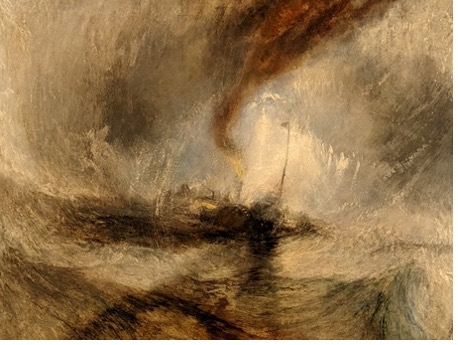
The Art of the Sublime
What is the sublime? In this talk we’ll examine definitions of the sublime, and ideas about our relationship to the world and the transcendent, by thinkers such as Edmund Burke, Immanuel Kant and the early German Romantics.
We’ll see how notions of the sublime have been manifested in art from ancient Greece to the present day, with a special focus on art from the early nineteenth century to now. Artists discussed include Caspar David Friedrich, J M W Turner, Frederic Edwin Church, Georgia O’Keeffe and abstract expressionists such as Mark Rothko, Barnett Newman, Clifford Still and Jackson Pollock.
Finally, we’ll examine how contemporary installation artists such as Yayoi Kusama, Richard Serra, James Turrell and Olafur Eliasson aim to induce sublime experiences in the viewer.
About our speaker:
Colin Pink has a BA in Philosophy and Politics from the University of Southampton and a MA in the History of Art from Birkbeck, University of London. He specialises in the interrelationship between the history of ideas and the history of art and has lectured on aspects of modern art at a wide range of cultural organisations. He also curates exhibitions and has published two books of poetry: Acrobats of Sound, 2016 and The Ventriloquist Dummy’s Lament, 2019.