It was during the Middle Ages that many of the familiar images associated with the Christmas story were devised and popularized: including the stable in Bethlehem inhabited by the ox and ass. What were the sources for these images? Are they always of biblical origin? This lecture, illustrated by images taken from sources as diverse as illuminated manuscripts, church portals, liturgical vestments, stained glass windows and goldsmiths’ work, will tell the stories surrounding Christ’s birth and investigate the often surprising sources for certain aspects of this well-known narrative.
About our speaker
Sally is a lecturer and tutor for the Early Medieval Year Course at V&A. Dean of 'European Studies' for 2 US Universities. Freelance lecturer for The Art Fund. BA (History) University of Durham; PhD (Medieval Manuscript illumination) and MA (Medieval History of Art) Courtauld Institute.

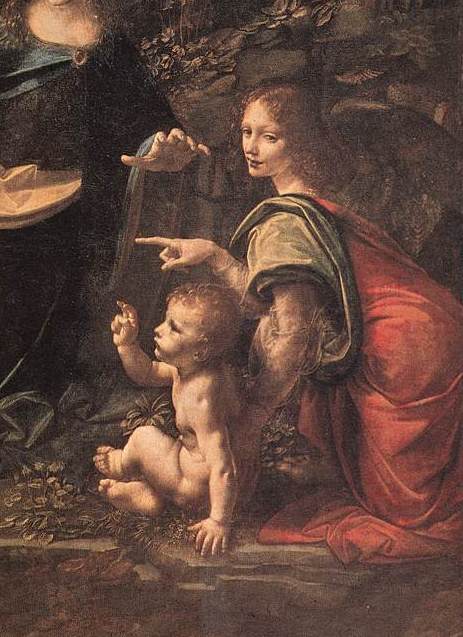
Leonardo da Vinci acknowledged early in his career that the hand was the organ through which the artist expressed himself. He would add that the hand could be as expressive as the face. He also took the approach that art was based on a scientific understanding of anything depicted and performed dissection of the hand to demonstrate how it functioned
This talk reviews the way in which Leonardo studied the anatomy and function of the hand. His paintings, drawings, and narrative art are reviewed to demonstrate how he used this knowledge to depict the hand as a form of expression.
About our speaker:
Guy came to The Arts Society not with a background in the arts but from the world of science in general, and surgery in particular. He describes himself as a retired surgeon with a lifelong passion, fascination, and admiration for the work of Leonardo da Vinci. Guy considers that the contribution he has made to both the world of art and the investigation of scientific concepts to be quite unique and extraordinary in the way that so many of his pioneering investigations have contributed to the understanding of our world today.
Wine has been with us for thousands of years, and our speaker will share the fascinating ‘brief story of wine’ through paintings, decorated drinking vessels, buildings and literature spanning 7,000 years of rich evidence.
About the speaker:
David has been a wine retailer, importer and distributor for 30 years. He has presented tastings and talks on wine to trade and private audiences. These have taken the form of wine ‘tastings’ or charity events where a particular subject is presented, and wines tasted.

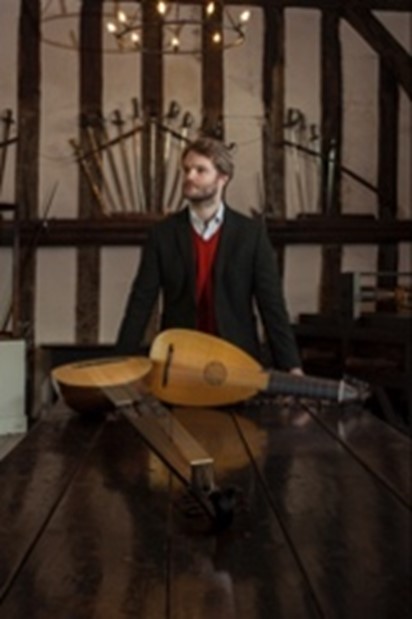
Despite our own modern preconceptions, the quiet introspection of melancholy was often associated with creativity in the past. This was prevalent in the sixteenth and seventeenth centuries, when significant treatises, music and art were dedicated to this condition. Treading the thin line between madness and contentment, this lecture will investigate why and how artists and musicians responded to this significant part of human consciousness.
Several pieces of live lute music will be performed as part of the lecture.
About our speaker
Adam Busiakiewicz is an Art Historian, lutenist and lecturer. After completing his Bachelor’s Degree in History at UCL in 2010 he held the position of Head of Historical Interpretation (curator) at Warwick Castle. In 2013 Adam pursued a Master’s Degree in Fine and Decorative Art at the Sotheby’s Institute of Art, London. He is currently pursuing his doctorate in Art History at Warwick University.
This lecture will examine neo-classic furniture in the context of the Grand Houses and rooms for which it was intended. Adam’s name has become an epithet for his architectural and interior design work, which is characterised by a remarkable and often overwhelming expression of stylistic and chromatic unity. Neither a furniture designer nor maker, he did however, design a number of pieces for specific locations within his room designs. His style was interpreted and adapted by celebrated cabinetmakers, who produced furniture that made “charming harmony” with his interiors.
About our speaker:
Freelance lecturer and researcher in English furniture history and also an antique dealer.
Janusz (Yanush) has lectured on antique furniture since 1975 and in The Arts Society (NADFAS) Directory since 1982. He has lectured to over 300 NADFAS societies including those in Australia, Belgium, France, Germany, The Hague and Spain.

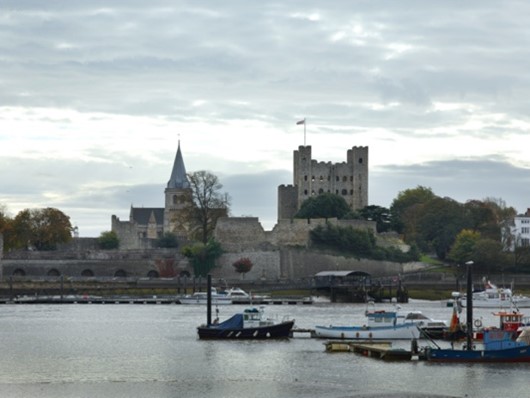
A ravishingly illustrated virtual tour of the Church of England’s magnificent 42 cathedrals, jewels in the crown of our built heritage, some recognised as World Heritage Sites. You will be treated with an overview of visual history and architectural evolution including some surprising stories and extraordinary treasures. The changing role of cathedrals in society both in the past and present day is also reviewed.
About our Speaker:
Janet was the Church of England’s Director of Church Buildings and Secretary of the Church Buildings Council and Cathedrals Fabric Commission for eight years. She has worked at Sotheby’s for nine years, was a trustee at the Churches Conservation Trust, the Museum of Fulham Palace and the Friends of the V&A and guided and lectured at the V&A.
Currently a trustee of the Priory of St John (Hospitallers) and a commissioning editor for Scala Heritage Publishers, Janet received an OBE for services to heritage in January 2017.
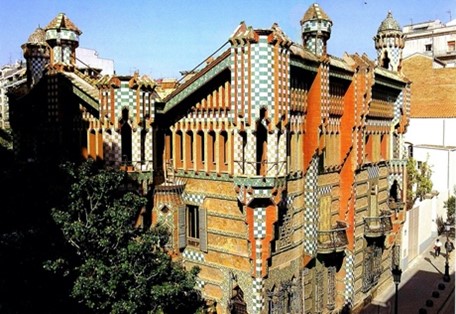
Antoni Gaudí is well known and much loved. In this lecture, his work will be explored in detail. It will demonstrate how he engaged with nature and worked with extraordinary ceramicists, iron workers, tilers and decorative artists. We will look at his public and private buildings and his relationship with a wealthy and demanding patron. Private, shy and retiring, he was also humorous and witty in his extravagant style. However, it will also be the aim of this lecture to uncover some of the other architects working in Barcelona over the turn of the twentieth century including Domenech y Muntaner and Puig y Cadafalch. Attention will be paid to several significant and ravishing buildings and some less well-known buildings in Barcelona.
About our Speaker
Jacqueline is Managing Director of an art tours company, running residential courses in Andalucía, in the art and culture of the region. Jacqueline is a course director and lecturer at the V&A and also lectures at The Royal Academy, Christie’s Education, The Art Fund and the London Art History Society. Her specialist field is Spanish Art, but she also lectures on European Art 1790-1950. She has recently published A Taste of Art, London (Unicorn Press 2019).
Egypt has a wealth of artefacts dated to its ancient past that today can be classified as art. This lecture examines one genre, the magnificent representational art displayed in the
wall reliefs and paintings found in their tombs, drawing on examples from the Old, Middle and New Kingdom Periods. It identifies the techniques, materials and different styles used and demonstrates its progression through the millennia to demonstrate how their accomplished artisans achieved the beautiful artworks we can still see today, more than 3,000 years after the burial tombs were sealed.
About our speaker:
Eileen has an MA from the Department of Archaeology at the University of London, is a published author and an authority on the ancient cultures of the world. She specialises in the History, Culture, Myths & Legends of the Ancient Worlds and is a keen Maritime Historian specialising in piracy in the Caribbean and the South Seas. She spends her time giving lectures to the Arts Society, on cruise ships and to various local organisations.

Pieter Bruegel the Elder (c.1525-1569) was an undisputed master; his small body of surviving paintings demonstrating his supreme ability to depict the daily life of the peasants with both humour and humility. This lecture will introduce Bruegel as a distinctive artistic voice in the sixteenth century, and consider the ways in which his revolutionary images were transmuted and popularised after his death in the works of his two sons, Pieter Brueghel the Younger (1564/5-1638) and Jan Brueghel the Elder (1568-1625). Examples are drawn from the exhibition Bruegel: Defining a Dynasty (2017, Holburne Museum, Bath) which Amy co-curated.
About our speaker
Amy is a Curator at Compton Verney Art Gallery & Park. She completed her BA Hons at University College London and received her PhD from the University of Edinburgh with a dissertation on Pieter Bruegel the Elder’s painting Children’s Games. Amy has published and lectured widely on Northern European art of the sixteenth and seventeenth centuries and in 2017 co-curated the exhibition Bruegel: Defining a Dynasty at the Holburne Museum in Bath.

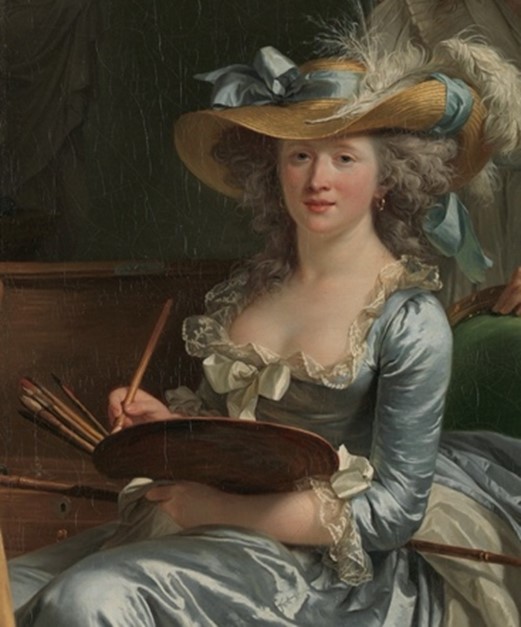
"The 14th century artist Cennino Cennini recommended using “the chicken bones that you will find under the dining table” for making charcoaled bone black to paint with. His treatise, The Artists’ handbook, gives us an understanding of some of the surprising materials which any artist had to master before he could begin to paint, such as the tail of a squirrel to make his paintbrushes. But many of these materials were difficult to use and have an effect on the finished look of paintings from the centuries before industrial processes changed the artist’s world. This lecture will explain the techniques and the reasons for some of the features of 15th and 16th century paintings which may seem odd to our modern eyes."
About the speaker:
Chantal has an MA in the History of Art from Edinburgh, a PhD from the Warburg Institute, London University. With 40 years' experience as a lecturer, She has taught at Sotheby's Institute of Art on the MA in Fine and Decorative Arts since 1989, and as a freelance lecturer for a number of societies in London, Italy and America.